A 40-yard container measures roughly 22 feet long, 8 feet wide, and 8 feet tall, with a low-sided walk-in rear gate for wheelbarrow and hand loading. The 40-yard holds about 40 cubic yards; by comparison the 30-yard…
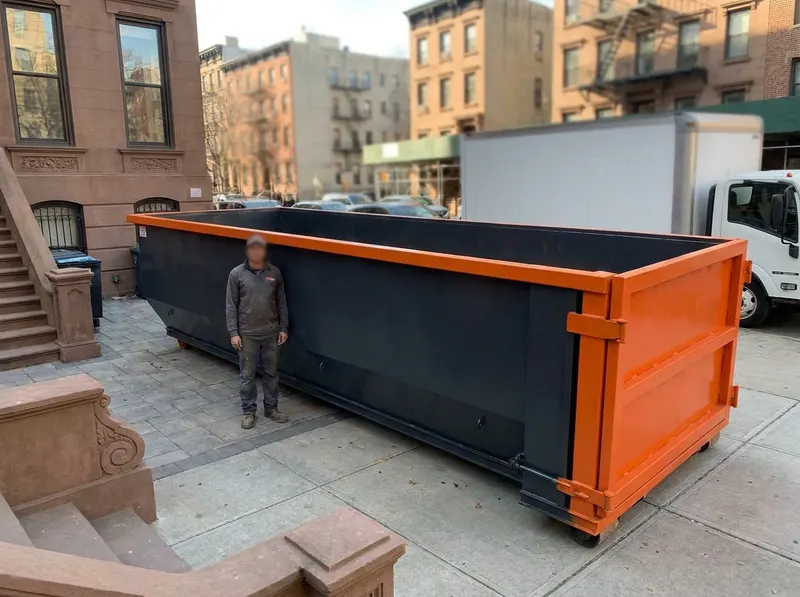
A 40-yard container measures roughly 22 feet long, 8 feet wide, and 8 feet tall, with a low-sided walk-in rear gate for wheelbarrow and hand loading. The 40-yard holds about 40 cubic yards; by comparison the 30-yard holds ~30 and the 20-yard ~20, so the step up matters most on volume, not weight, the 40-yard shines for light, bulky debris like drywall, framing lumber, cabinetry, and roofing tear-off where a smaller box fills by volume long before it fills by weight. For dense material such as broken brick, tile, or dirt, Heavy Duty Dumpster Rental often steers customers to a 20- or 30-yard, because a packed 40-yard of masonry can exceed what a roll-off truck may legally haul; the OSHA jobsite loading guidance and local weight limits both apply. The trade-off is simple: a 40-yard clears a brownstone gut in Harlem or a Tribeca loft reno in one pull, but it needs about 60 feet of straight approach for the roll-off truck and a clear 22-foot footprint on the ground.
Placement is the real variable in Manhattan. On a private lot or a wide curb cut in Washington Heights or Inwood the 40-yard sits on-site with no permit. On a public street in Chelsea, the Upper West Side, or Hell's Kitchen, a container in the roadway typically requires a street-occupancy permit from the NYC Department of Transportation, and placement near a bike lane, bus stop, or hydrant is restricted. Step 1: call with the address and job type. Step 2: our team confirms whether the 40-yard fits the chosen spot or a 30-yard is the safer legal choice. Step 3: we schedule the drop, note permit needs, and set the swing direction of the rear gate. Step 4: the container is delivered and positioned. Step 5: you load it and call for pickup, usually within a standard rental window.
New York's narrow side streets and walk-up buildings change what the biggest box can do. A 40-yard is practical on the loading docks near the Hudson Yards edge of Chelsea or on the wider avenues flanking the Upper East Side, but on a cramped Lower East Side or East Village block a 30-yard often lands easier and avoids a permit headache. Construction and demolition debris handled this way is governed by the EPA's construction and demolition materials program, and recyclable loads can be checked against Earth911 recycling locators. Prohibited items, paint, solvents, batteries, and other household hazardous waste, must stay out of every roll-off; those go through the city's dedicated drop-off program.
A dumpster rental is not junk removal: Heavy Duty Dumpster Rental drops the container and you (or your crew) load it, which is why the 40-yard is the standard pick for active job sites near Columbia University dorm turnovers, large estate cleanouts off Central Park, and multi-unit renovations across the county. For reference on container specs and roll-off standards, the National Waste & Recycling Association publishes industry sizing data, and businesses verifying haulers can cross-check the New York State DEC waste transporter rules. Jobs generating recoverable metal or wood can reference the Construction & Demolition Recycling Association, and worksite waste-stream planning aligns with International Solid Waste Association practice; green-building projects tracking diversion often reference the U.S. Green Building Council LEED waste credits.
Every job gets a firm, written price after an on-site visit.
Tell us about your 40-yard dumpster rental job in New York and we'll send a clear, written quote, usually the same day.
 Heavy Duty Dumpster Rental