A construction and demolition dumpster is a container you load yourself over the course of a job, it is not junk removal, where a crew carries the material out for you. The EPA reports construction and demolition…
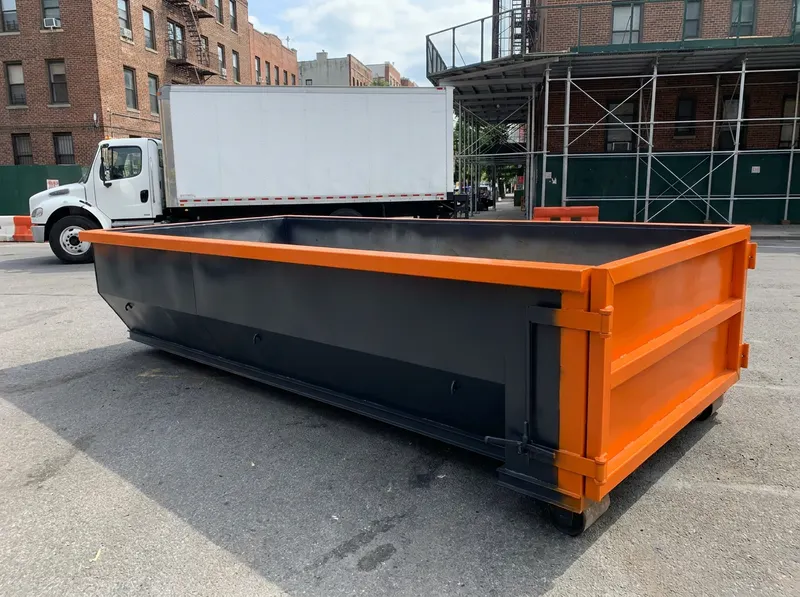
A construction and demolition dumpster is a container you load yourself over the course of a job, it is not junk removal, where a crew carries the material out for you. The EPA reports construction and demolition debris made up roughly 600 million tons of U.S. material in a recent year, more than twice the weight of municipal trash, which is why C&D hauling is priced by container size and dense load rather than by the bag.
Size the container to the demolition, not the room count.
A 10-yard holds about four pickup-truck loads and fits a single bathroom gut or a small deck tear-off; a 20-yard handles a kitchen-and-bath remodel or a few hundred square feet of roofing; a 30-yard suits whole-floor demolition and new framing scrap; a 40-yard absorbs commercial fit-outs and full-gut renovations. The trade-off is footprint versus volume: a 40-yard carries the most debris but needs the most curb or driveway length, which matters on a 20-foot Chelsea brownstone frontage far more than it does on an Inwood lot. Heavy, concentrated material, concrete, brick, tile, dirt, belongs in a 10-yard or 15-yard even when the pile looks small, because dense debris maxes out the legal road weight long before it fills a big box.
Roofing shingles weigh about 250 pounds per 100 square feet per layer, so a tear-off counts fast.
Here is how a rental runs in New York. Step 1: confirm the debris type and the size, since mixed C&D and clean concrete fill are handled differently. Step 2: pick the drop spot, a private driveway or lot needs no permit, while a container sitting in the roadway on a Manhattan street requires a permit from the NYC DOT street-use permit office.
Step 3: take the delivery, loading from the open end or over the side. Step 4: load to the fill line, level with the top rails keeps the load legal to haul under OSHA 1926 jobsite rules and road-weight limits. Step 5: call for pickup and swap when it is full.
Dense debris disposal is governed statewide by the NY DEC construction and demolition debris program, and much of it, concrete, metal, clean wood, is recoverable through material recovery streams like Earth911.
Across Harlem walk-ups, Washington Heights hillside blocks, Upper West Side and Upper East Side co-op renovations, Lower East Side and East Village tenement guts, Tribeca loft conversions and Hell's Kitchen fit-outs, the hard part is rarely the dumpster, it is parking it legally on a tight street. Placement near landmarks such as Central Park, the High Line or Columbia University often sits on metered or restricted roadway, so those drops are planned around the permit. Certain materials stay out of a standard C&D box: appliances with refrigerant, tires, and anything classed as household or construction hazardous waste such as asbestos, solvents and lead paint waste, which carry separate handling under the federal RCRA waste rules and OSHA asbestos standards.
The NYC construction codes set what can be demolished and when, and roll-off weights are checked against FMCSA road-weight limits at the transfer station.
Every job gets a firm, written price after an on-site visit.
Tell us about your construction & c&d debris dumpsters job in New York and we'll send a clear, written quote, usually the same day.
 Heavy Duty Dumpster Rental